

When rescuers reached Jessica Johnston beside a remote waterfall in New Zealand, they had little time to make a decision.
The hiker had fallen approximately 55 meters, or 180 feet, onto rocks near the Arahura River on the South Island’s West Coast. She was bruised, cut and needed urgent medical treatment.
A rescue helicopter prepared to carry her to safety.
But her Border Collie, Molly, was nowhere to be found.
The aircraft could not remain in the dangerous terrain indefinitely. Jessica was evacuated on March 24, 2026, while Molly was left somewhere in the dense forest surrounding the waterfall.
For the next seven days, her owner recovered in hospital without knowing whether the dog had survived.
The first searches found nothing
Matt Newton, the owner and pilot of Precision Helicopters New Zealand, learned about the missing dog and contacted Jessica while she was still in hospital.
He promised that he would look for Molly.
Newton flew over the area several times, but the forest canopy, river and rocky terrain made it difficult to spot a single dog from the air. Searchers found no clear tracks and heard no barking.
Molly had vanished into an environment where heavy rain, cold nights and steep ground could quickly become dangerous.
Newton could have ended the effort after the first unsuccessful flights.
Instead, he and his family began raising money for a larger search.
Strangers funded another helicopter mission
The appeal spread quickly.
People who had never met Jessica or Molly began donating money. The fundraiser eventually collected more than 11,000 New Zealand dollars, enough to pay for additional helicopter time and thermal-imaging equipment.
The support allowed Newton to organize another mission with a veterinary nurse, volunteer searchers and a specially chosen dog named Bingo.
Bingo’s role was important.
A frightened Border Collie might avoid unfamiliar people, even when exhausted and hungry. Another calm dog could help Molly understand that the approaching volunteers were not a threat.
The new team returned to the Arahura River on March 31, one week after Jessica had been rescued.
A shape appeared on the thermal camera
The helicopter followed the river toward the waterfall.
Within about an hour, the thermal-imaging equipment detected a warm shape near the rocky area below.
The team moved closer.
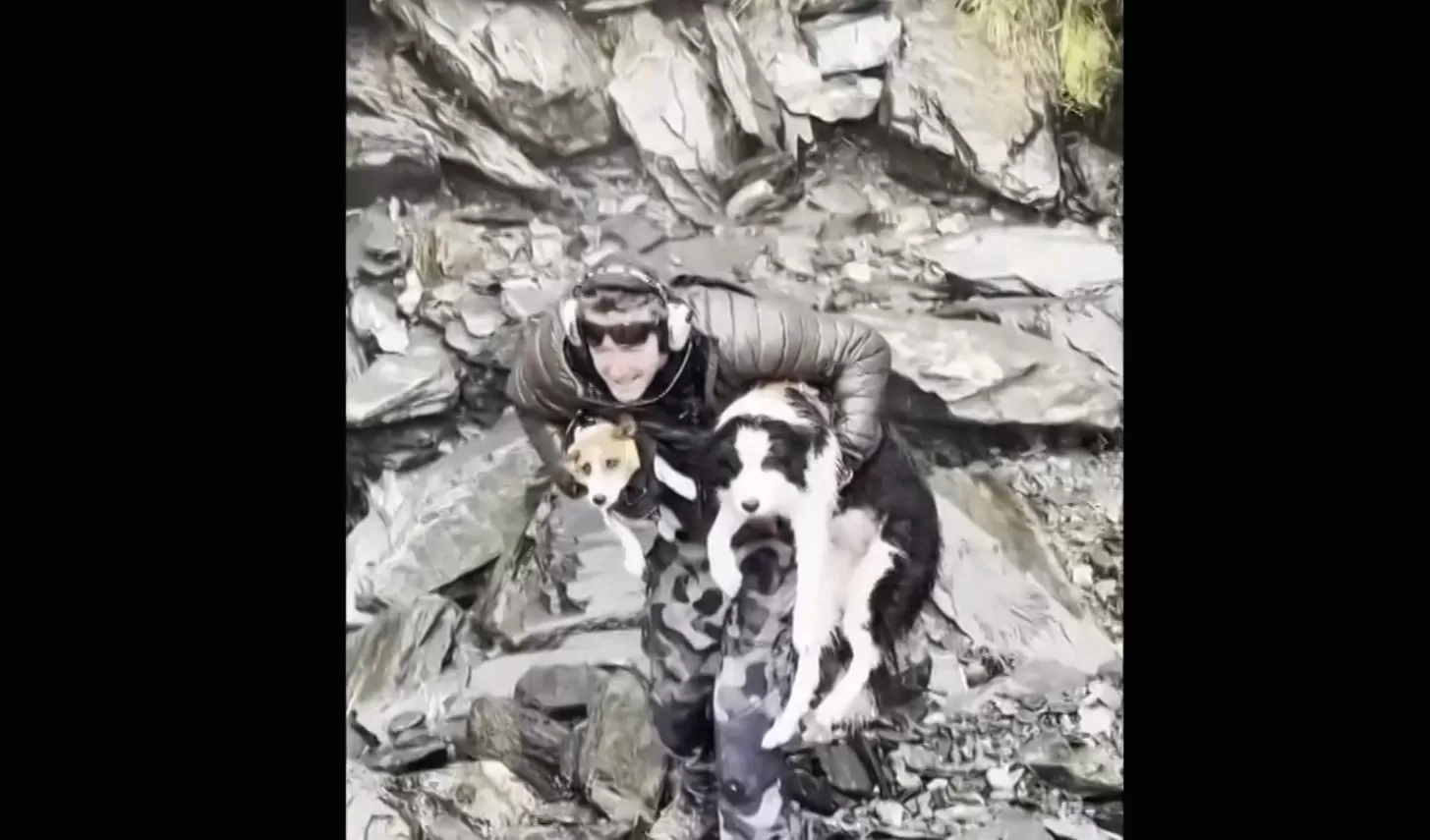
There, only a few meters from the place where Jessica had fallen, was Molly.
Nobody knew whether the dog had also fallen from the waterfall or had followed her owner’s scent and eventually reached the site. She was wet, hungry and bedraggled, but she was alive.
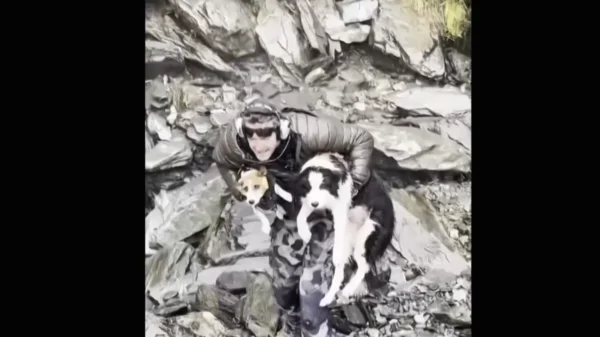
The helicopter descended low enough for volunteer Wayne Holmes and Bingo to reach the ground.
Molly did not run.
According to Newton, she appeared to understand that the people and dog approaching her had come to help.
Molly climbed into the helicopter
Once Molly was secured, the rescuers placed her aboard the aircraft.
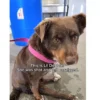
Photographs taken during the flight show the Border Collie looking through the open helicopter doorway after spending a week alone in the wilderness.
Newton said Molly was in surprisingly good physical condition. He believed she may have survived by eating small feral animals or anything else she could find near the river.
Back at the helicopter base, volunteers who had been waiting to join later search shifts learned that Molly had already been found.
The planned search was replaced by food, celebration and a long series of cuddles with the rescued dog.
Her injured owner came to meet her
Jessica was still recovering from the fall when she received the news.
Hours after Molly’s rescue, she traveled to the helicopter base for the reunion.
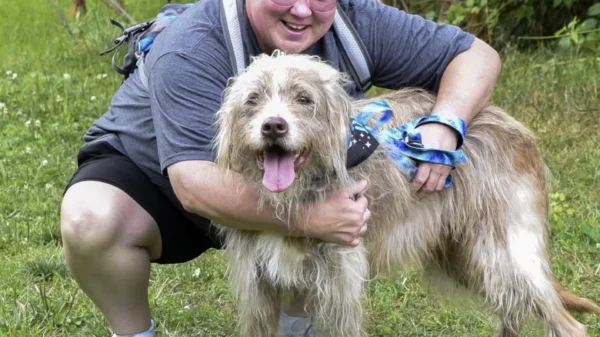
Images released by Precision Helicopters show Molly pressed against her owner as Jessica holds her close.
The dog had survived seven nights outside.
Jessica had survived a fall that could easily have killed her.
Both returned from the same wilderness separately, before being brought together again by a pilot and a group of strangers who refused to stop searching.
Nobody was required to return for Molly
The emergency team had completed its immediate mission when Jessica was flown to hospital.
Going back for Molly required additional aircraft time, specialist equipment, volunteers and money. It was not a routine extension of the original rescue.
Newton chose to become involved after hearing what had happened.
People across New Zealand then donated enough to make the flight possible.
Their contributions funded three additional hours of helicopter searching and the use of thermal equipment capable of detecting Molly among the rocks and trees.
Dogs often remain near the last place they saw their owners
Lost dogs do not always continue moving in a straight line.
A frightened animal may hide during daylight, avoid rescuers and repeatedly return to a familiar location. In Molly’s case, she was eventually found very close to the waterfall where Jessica had been injured.
That detail suggests she may have remained nearby or returned while searching for her owner.
Her behavior when Bingo and the volunteer approached also helped the rescue. Instead of fleeing deeper into the forest, Molly stayed close enough to be safely collected.
The flight that brought both of them home
Jessica’s first helicopter flight saved her life.
Molly’s flight one week later brought back the companion she had been forced to leave behind.
Newton believed the reunion could help Jessica’s recovery.
After surviving a severe fall, hospitalization and seven days of uncertainty, she no longer had to wonder whether Molly was still waiting near the waterfall.
The dog was wet and hungry when rescuers found her.
But when the helicopter lifted away from the river, Molly was finally leaving the wilderness too.