



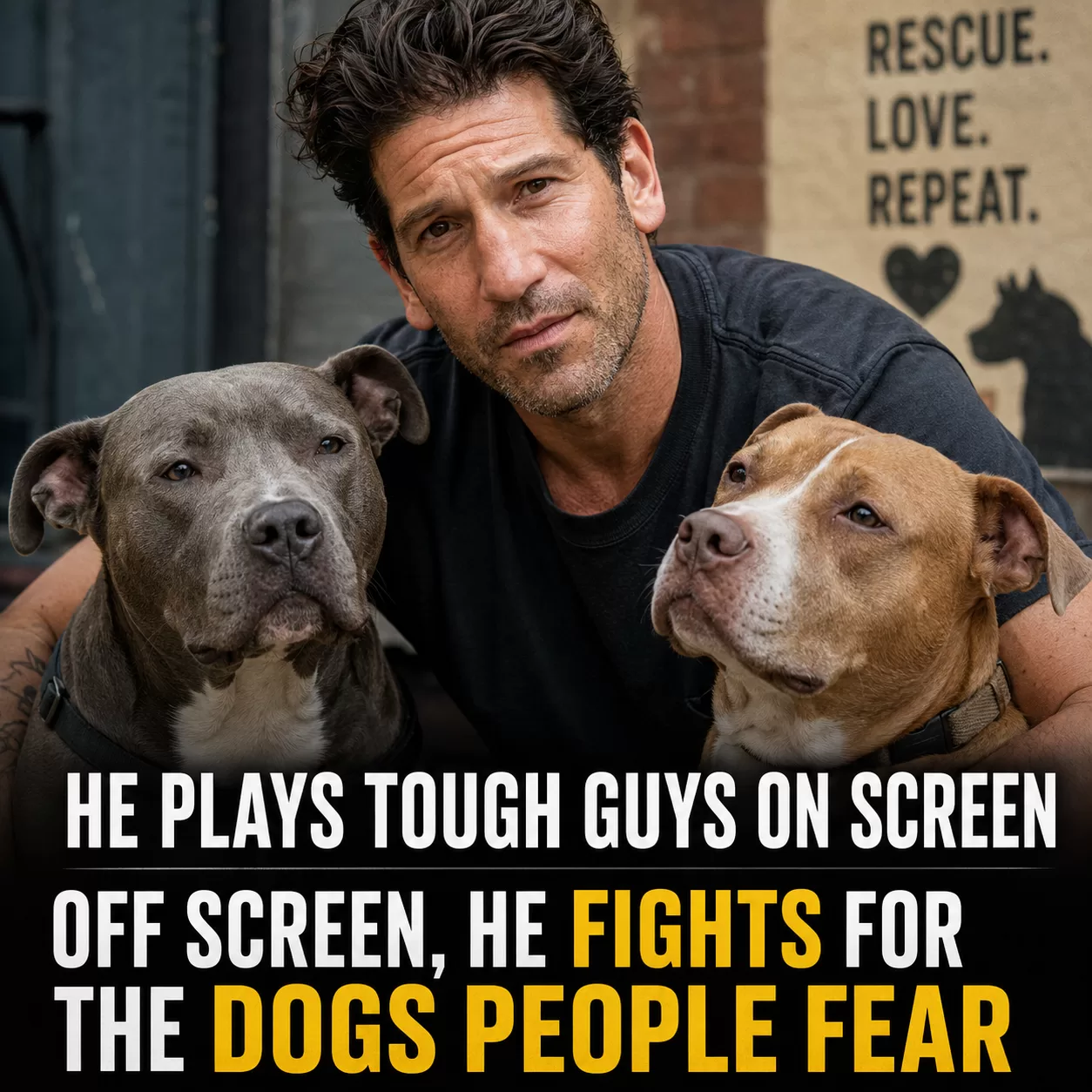

Jon Bernthal has built a career playing men who look like they should never be underestimated.
But away from film sets and television cameras, some of the toughest characters in his life have had four legs.
For years, Bernthal has openly defended pit bull-type dogs and challenged the idea that appearance alone should decide whether an animal is considered dangerous, unwanted or impossible to adopt.
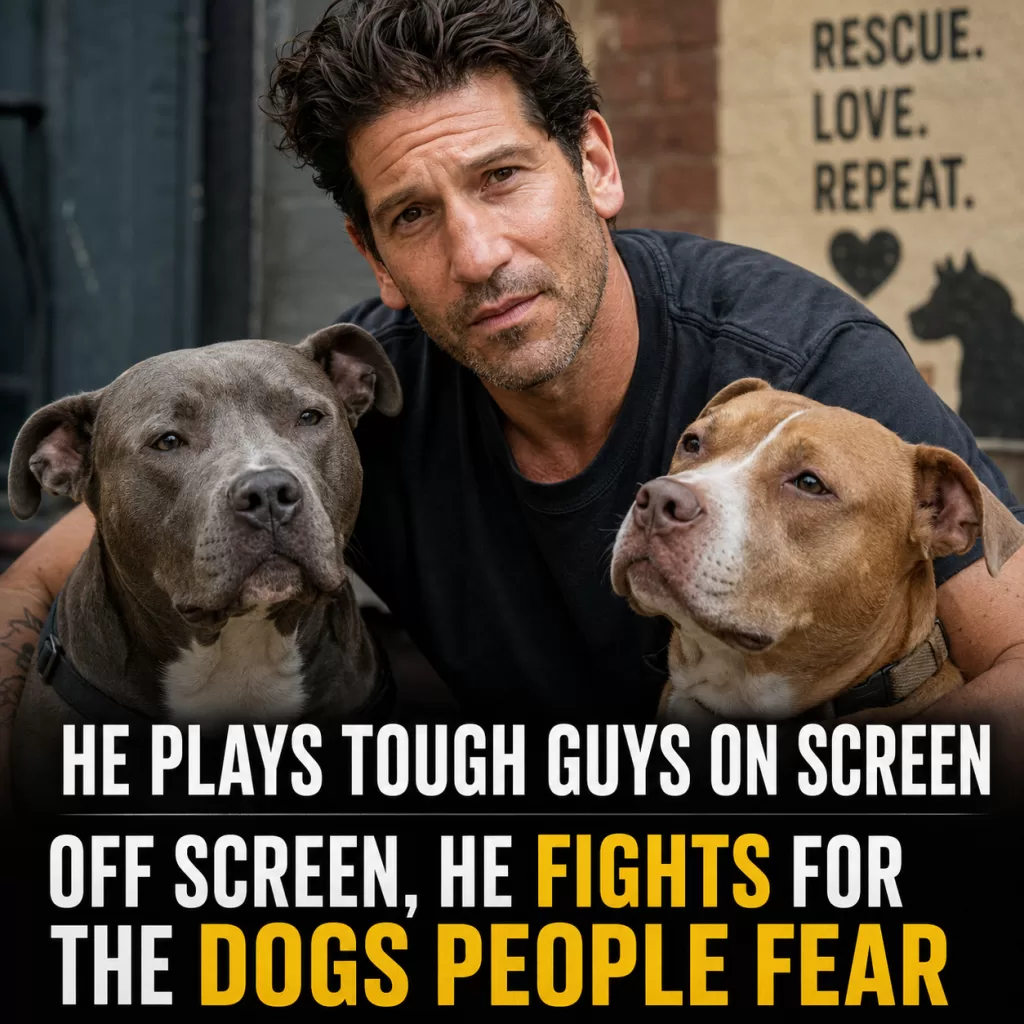
His own rescued dogs, including Boss and Venice, became part of his daily life.
They did not stay hidden at home.
They traveled with him.
They showed up around auditions, meetings and production sets.
And simply by being there, calm and loved, they helped make Bernthal’s point better than any speech could.
He knows what happens when people judge the breed first
Pit bull-type dogs are among the most misunderstood animals entering shelters.
Some are passed over repeatedly because of their muscular appearance.
Others face housing restrictions.
Families can find themselves unable to rent with them, while potential adopters may walk past a kennel before ever learning what the individual dog is actually like.
Bernthal has spoken publicly about that stigma and the consequences it can create.
His argument has never needed to be complicated:
A label is not a personality.
Two dogs that look similar can have completely different histories, temperaments and needs.
His own dogs became ambassadors without trying
Boss and Venice did not need a public-relations campaign.
They simply lived their lives beside him.
They were family dogs.
They traveled.
They interacted with people.
They became familiar faces around Bernthal’s work.
That everyday normality mattered.
For someone who has spent years playing intimidating characters, Bernthal understood the irony better than most.
People often decide who — or what — is dangerous before they know anything else.
Dogs experience the same thing.
But advocacy does not mean ignoring responsibility
Bernthal’s message has also included something important that sometimes gets lost in emotional discussions about breeds.
Every dog must be judged individually.
Strong, athletic dogs need responsible owners.
That means training.
Secure handling.
Exercise.
Socialization.
And knowing when a particular dog is not suited to a particular home.
Defending dogs from unfair stereotypes does not mean pretending behavior never matters.
It means behavior should matter more than appearance.
Foster first. Judge later.
Bernthal has also fostered dogs while they waited for permanent homes.
That work matters because shelters can only learn so much about an animal inside a kennel.
In a foster home, rescuers can often see how a dog behaves around people, routines and normal household life.
For dogs carrying a stigma before anyone meets them, that opportunity can change everything.
A frightened shelter dog can become a relaxed couch companion.
A dog ignored because of his head shape can become someone’s best friend.
Sometimes changing a mind only takes one dog
Bernthal has spent much of his career portraying men people are supposed to fear.
His dogs offer the opposite lesson.
Sometimes the thing people were taught to fear turns out to be gentle, goofy and completely devoted to its family.
Changing public perception does not always happen through debates.
Sometimes it happens when someone finally meets the dog.
And realizes the stereotype was louder than the truth.