







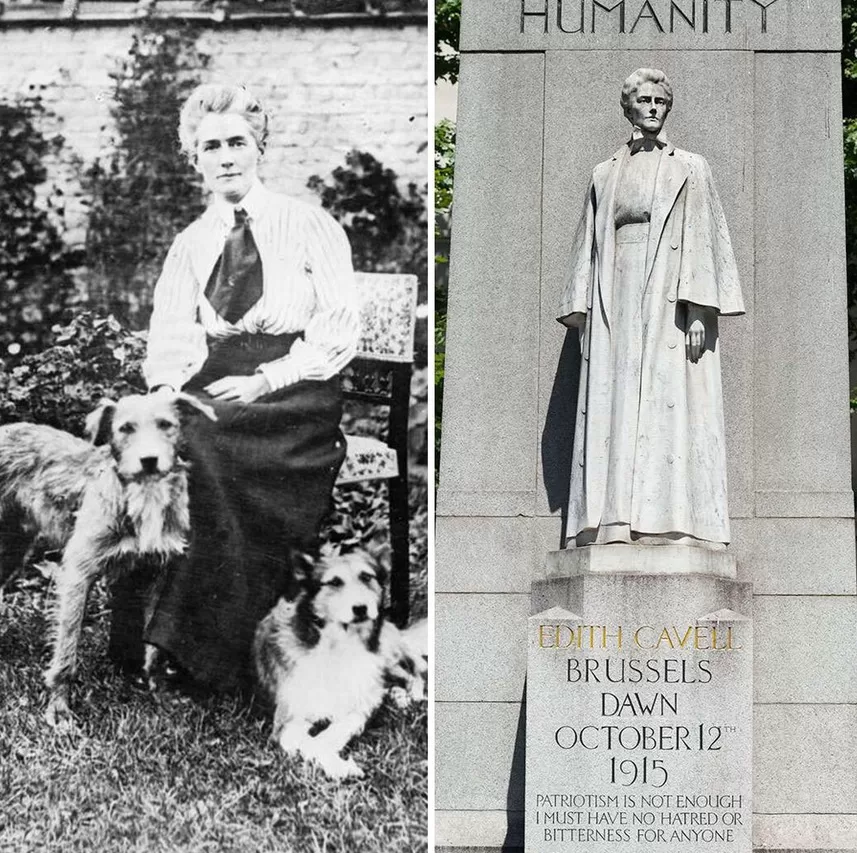

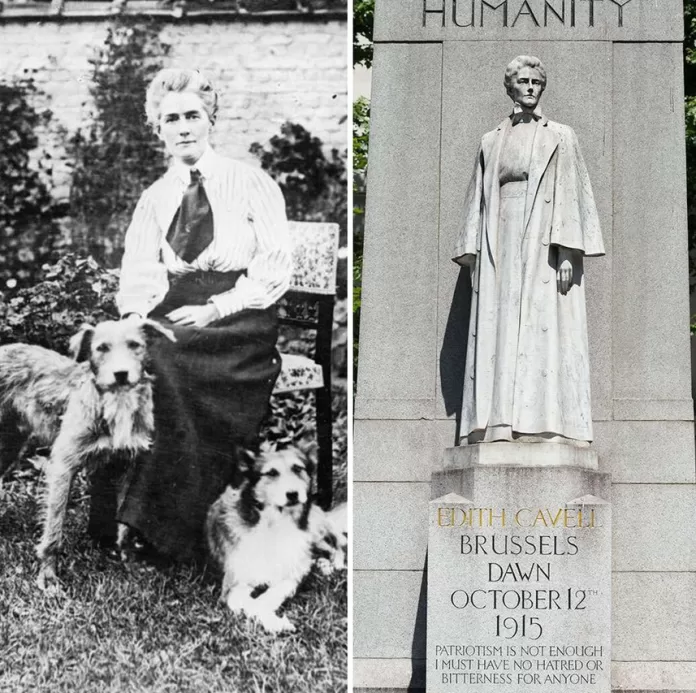
The Morning of October 12, 1915
On the morning of October 12, 1915, a 49-year-old British nurse named Edith Cavell stood before a German firing squad in Brussels. The city was under German occupation, and Europe was already deeply scarred by the violence of the First World War.
The night before her execution, Cavell had made a final confession. In that quiet moment, she expressed a belief that would later define her legacy. Facing God and eternity, she said that “Patriotismus nicht genug” and that she must not harbor hatred toward anyone.
Shortly before her death, she spoke calmly and without fear. She said she was ready to die for her country.
Those words would travel far beyond the prison walls.
A Nurse in an Occupied City
Edith Cavell was not a soldier, a politician, or a revolutionary. She was the head nurse of a training school in Brussels, dedicated to professional nursing and patient care. When war broke out, Belgium became one of the first countries to suffer occupation.
In the chaos of war, Cavell continued her work. She treated wounded soldiers brought to her hospital without distinction. British, French, Belgian, and German soldiers all received care. For her, the uniform did not matter. The injury did.
This commitment to impartial care placed her firmly within the principles of medical ethics. But Cavell’s actions went beyond her official duties.
A Secret Network of Escape
While continuing her work as a nurse, Cavell became part of a clandestine network that helped Allied soldiers escape from occupied Belgium. Over time, more than 200 British and French soldiers were assisted in fleeing through neutral Holland.
These men were often wounded, disoriented, or hiding after battles. Cavell and others provided shelter, medical assistance, civilian clothing, and guidance to reach safety. Every successful escape increased the risk for those involved.
Under German military law, aiding enemy soldiers was considered treason.
Eventually, the network was exposed.
Arrest, Trial, and Sentence
Edith Cavell was arrested by German authorities and placed in solitary confinement. During her interrogation, she did not deny her actions. She openly admitted to helping soldiers escape, knowing full well what the consequences could be.
Her trial was conducted by a German military court. The verdict was swift. Cavell was found guilty of treason and sentenced to death.
International appeals followed. Governments, diplomats, and religious leaders pleaded for clemency. All requests were denied.
On October 12, 1915, Edith Cavell was executed by firing squad.
Global Reaction and Outrage
News of her death spread rapidly across the world. The execution of a nurse who had dedicated her life to healing shocked the international community. Public outrage erupted in Britain, France, the United States, and beyond.
Cavell became a symbol almost immediately. To many, she represented the cruelty of war and the moral cost of rigid obedience to military law. Her image was used in posters, speeches, and campaigns to illustrate the need to resist injustice.
Yet beyond propaganda, her story endured because of its moral clarity.
She had not acted out of hatred for Germany. She had acted out of compassion for individuals in danger.
Humanity in the Midst of War
What sets Edith Cavell apart is not only what she did, but how she understood it. Her statement that “Patriotismus nicht genug” reveals a deeper conviction. Love for one’s country, in her view, did not excuse hatred or cruelty toward others.
She believed that moral responsibility did not disappear during wartime. Even when nations were at war, individuals remained accountable for their choices.
Cavell’s life challenged the idea that neutrality or compassion equaled weakness. In reality, her actions required extraordinary courage.
A Lasting Legacy
Today, Edith Cavell is remembered as a pioneer of modern nursing and a figure of moral resistance. Statues, memorials, and institutions bear her name. Her contributions to professional nursing education continue to influence healthcare systems worldwide.
More importantly, her story continues to raise difficult questions. What does it mean to do the right thing when the law demands otherwise? Where does personal conscience stand in times of national conflict?
Edith Cavell answered those questions with her life.
Why Her Story Still Matters
More than a century later, her words remain unsettlingly relevant. Wars still divide. Nationalism still demands loyalty. And individuals still face moments where obedience conflicts with humanity.
Edith Cavell chose humanity.
She treated the wounded without discrimination. She helped the trapped escape. She refused to hate, even as she faced death.
Her life stands as a reminder that even in the darkest circumstances, compassion remains a choice. And sometimes, that choice demands everything.
Edith Cavell did not live to see peace return. But she left behind something just as powerful. Proof that conscience can survive even where war tries to erase it.