




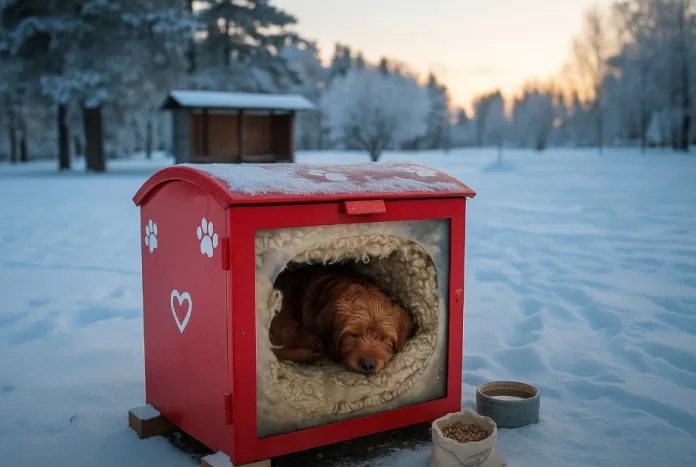
When Old Letterboxes Become Lifesavers
In Estland nimmt eine neue Form des Mitgefühls Gestalt an – ausgediente Briefkästen werden zu kleinen Hundehütten umgebaut. Was einst Briefe trug, schenkt nun Wärme und Schutz.
Across Estonia, a creative and compassionate initiative is quietly changing the landscape of animal care. What began as a sustainability idea has evolved into something far more meaningful. Decommissioned letterboxes, once mounted on posts and walls to carry messages, are now being repurposed into miniature shelters for dogs who spend their nights outdoors.
Instead of rusting away in storage or being discarded as scrap metal, these sturdy boxes are finding a new life. Their solid structure makes them surprisingly suitable as protective enclosures, especially in regions where harsh winters bring freezing temperatures, rain, and heavy snowfall.
Thoughtful Design for Real Protection
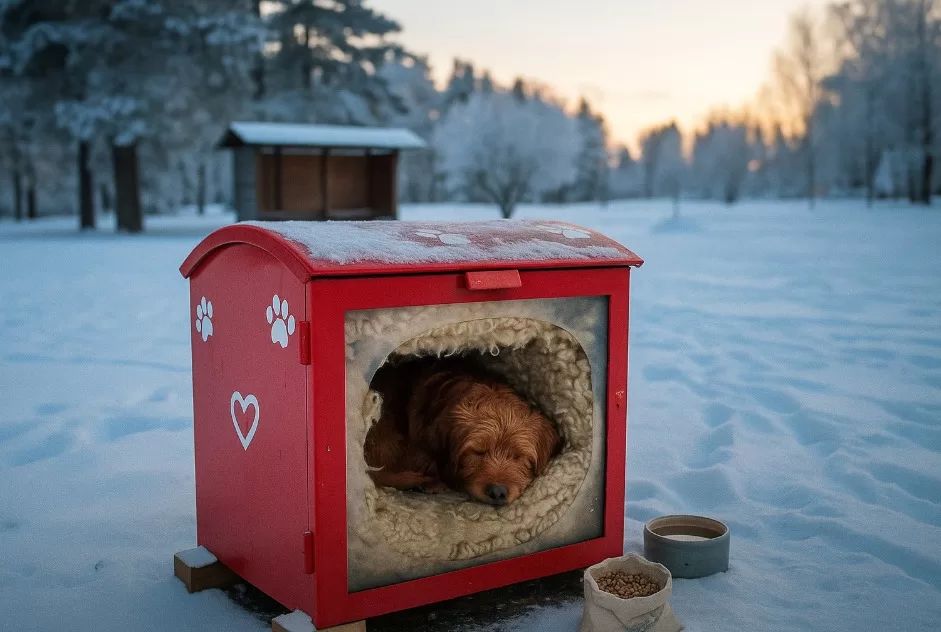
Die Innenräume werden mit Filz und Wolle ausgekleidet, isoliert und leicht erhöht, damit Regen und Schnee draußen bleiben. So entstehen trockene, sichere Zufluchtsorte für Hunde, die sonst im Freien schlafen müssten.
Volunteers do far more than simply place the boxes on the ground. Each one is carefully modified to ensure comfort and safety. The interiors are lined with insulating materials such as felt and wool, which help retain warmth during Estonia’s long, cold seasons. Some are reinforced with additional insulation panels to prevent heat loss.
The shelters are also slightly elevated from the ground. This detail is crucial. By raising them, moisture from rain and melting snow is prevented from seeping inside. The result is a dry, wind protected refuge that offers vulnerable animals a place to rest safely.
Though compact, these shelters provide essential protection for dogs that might otherwise sleep exposed to the elements. For many animals, especially strays or those in rural areas without adequate housing, even a small insulated space can mean the difference between survival and suffering.
Community Effort with a Personal Touch
Freiwillige bemalen die kleinen Hütten mit Pfotenabdrücken, stellen Wassernäpfe daneben und füllen regelmäßig Futterbeutel nach. In einigen Städten sind sie sogar mit GPS ausgestattet, damit Tierärzte und Helfer wissen, wo Unterstützung gebraucht wird.
The transformation of these letterboxes is not just practical, it is deeply personal. Volunteers decorate the small shelters with painted paw prints and bright colors, turning them into visible symbols of care within neighborhoods.
Beside many of the shelters, water bowls are placed and regularly refilled. Bags of food are checked and replenished by community members who take responsibility for monitoring the animals that use them. This ongoing care is what truly sustains the initiative. The shelters are not abandoned installations; they are part of an active network of compassion.
In some Estonian cities, innovation has gone even further. Certain shelters are equipped with GPS tracking systems. These allow veterinarians and animal welfare workers to identify where assistance may be needed. If a dog remains in one location for an unusual amount of time or shows signs of distress, responders can locate the shelter quickly and provide medical attention.
This combination of traditional craftsmanship and modern technology reflects a forward thinking approach to animal welfare.
Sustainability with a Purpose
Diese Initiative zeigt, dass Nachhaltigkeit auch Mitgefühl bedeuten kann – eine stille Erinnerung daran, dass selbst die kleinsten Orte die größten Herzen erwärmen können.
At its core, this initiative represents more than just recycling. It embodies the idea that sustainability can be intertwined with empathy. Instead of viewing old materials as waste, communities are reimagining them as tools for care.
Repurposing letterboxes reduces environmental impact by extending the life cycle of existing materials. At the same time, it addresses a social issue by providing immediate, tangible help to animals in need.
This quiet movement also demonstrates how small scale actions can ripple outward. One converted box may protect a single dog. But hundreds of them scattered across towns and rural areas create a visible culture of responsibility and kindness.
A Model for Other Communities
The Estonian example offers inspiration beyond its borders. Many countries face similar challenges regarding stray or outdoor animals, particularly in regions with extreme weather conditions. The solution does not always require massive funding or complex infrastructure. Sometimes it begins with rethinking what already exists.
A retired letterbox might seem insignificant. Yet in the hands of determined volunteers, it becomes a shelter. With insulation, elevation, monitoring, and regular maintenance, it transforms into a safe haven.
More importantly, it sends a message. Communities that care for their most vulnerable members, including animals, strengthen their social fabric. These small shelters serve as reminders that compassion can be practical, visible, and accessible.
The Power of Quiet Kindness
There is something profoundly moving about this initiative because it is simple. It does not rely on spectacle or grand announcements. Instead, it works quietly, box by box, shelter by shelter.
Where letters once carried words of affection and connection, these structures now carry warmth and security. The symbolism is powerful. Communication has turned into protection.
In a world often dominated by large scale debates about sustainability and animal welfare, Estonia’s letterbox shelters show that meaningful change can begin with modest, local efforts. Even the smallest structure can become a sanctuary when shaped by thoughtful hands.
And sometimes, the warmest hearts are found in the smallest spaces.