





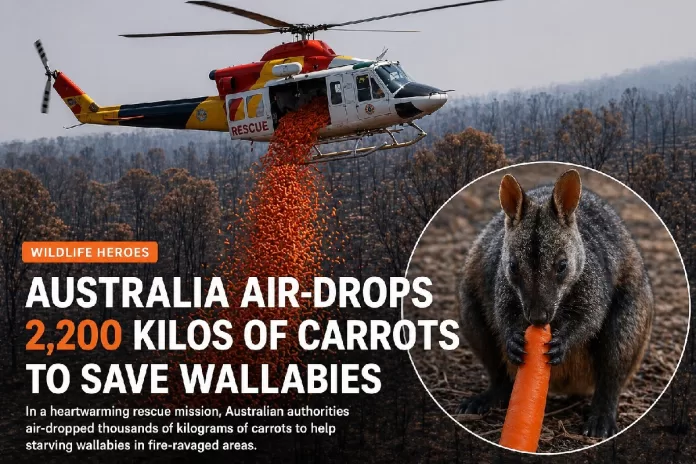
In one of the most talked-about wildlife rescue efforts in recent years, Australian authorities carried out an unusual but effective mission: dropping thousands of kilograms of fresh vegetables from the air to help endangered animals survive.
The operation took place in the aftermath of the catastrophic bushfires that swept across Australia during the 2019–2020 season. Vast areas of natural habitat were destroyed, leaving many species without access to food or shelter. Among the most affected were the brush-tailed rock wallabies, a vulnerable species already struggling before the fires.
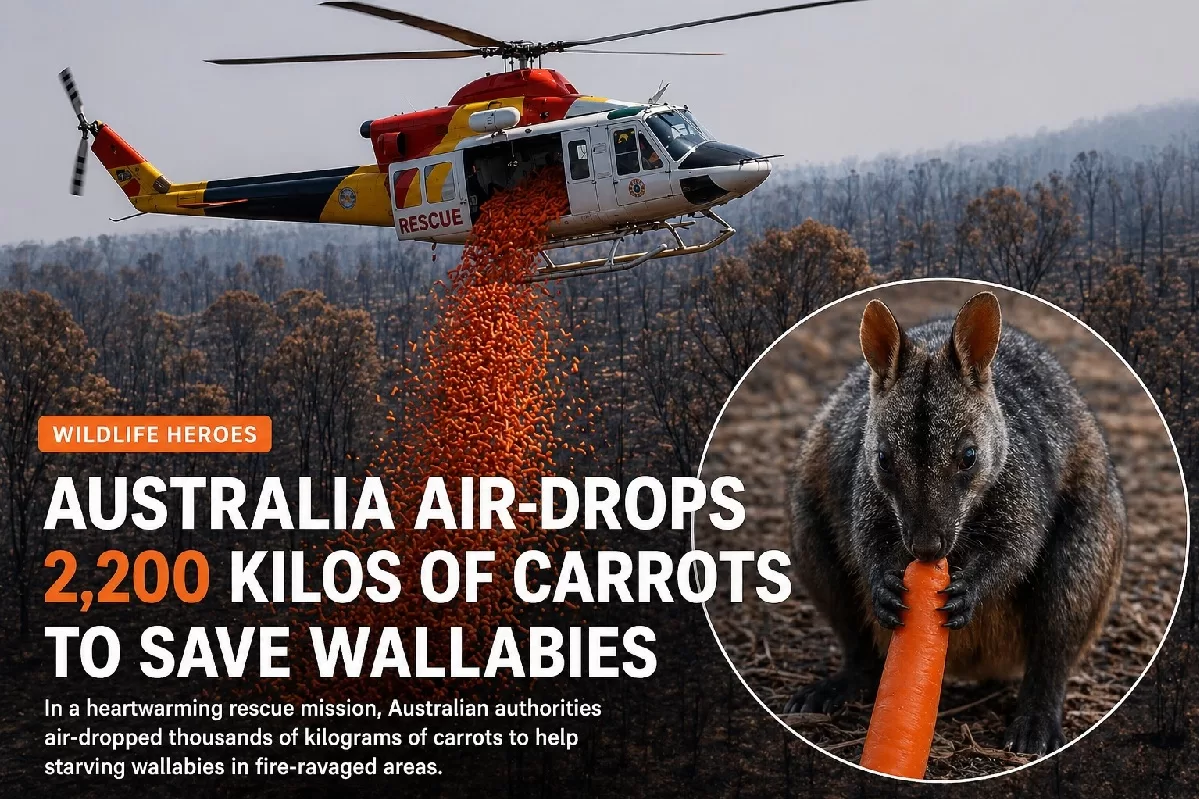
Faced with rapidly deteriorating conditions in remote and hard-to-reach areas, officials in New South Wales turned to an unconventional solution. Using helicopters, they air-dropped more than 2,200 kilograms of carrots and sweet potatoes across key habitats where wallaby populations were known to exist.
The goal was simple: provide an immediate food source to prevent starvation until the ecosystem could begin to recover naturally.
Authorities selected vegetables carefully. Carrots and sweet potatoes were chosen because they are durable, nutritious, and less likely to spoil quickly in harsh outdoor conditions. The drops were carried out in rocky terrains and isolated zones where ground access would have been slow or impossible.
Wildlife experts monitored the situation closely. Early observations suggested that the wallabies quickly adapted to the new food supply. In areas where the drops occurred, signs of feeding activity increased, indicating that the intervention had the intended effect.
While the images of helicopters “raining carrots from the sky” went viral online, the reality behind the operation is more grounded. This was not a large-scale solution for all wildlife affected by the fires, but a targeted emergency response aimed at preventing the collapse of specific populations.
The bushfires themselves were among the worst in Australia’s history. Millions of hectares burned, and estimates suggest that billions of animals were impacted either directly or through habitat loss. In this context, even localized interventions like the carrot air-drop played an important role in stabilizing vulnerable species.
Conservationists emphasize that such measures are temporary. Long-term recovery depends on habitat regeneration, ongoing protection efforts, and careful management of ecosystems. Still, rapid-response actions like this can make the difference between survival and extinction for species already at risk.
The story has continued to circulate widely on social media, often presented in simplified or emotional terms. However, the core facts remain accurate: Australian authorities did deploy aerial food drops as part of a broader wildlife rescue effort during a time of environmental crisis.
Beyond the headlines, the mission highlights a practical approach to conservation under pressure. When traditional methods are not feasible, adaptability becomes essential. In this case, a straightforward idea—delivering food from the air—helped sustain a species through one of its most difficult periods.
As climate events become more frequent and severe, similar interventions may become more common. For now, the Australian carrot drop stands as a clear example of how quick decisions and targeted action can support wildlife when it matters most.