






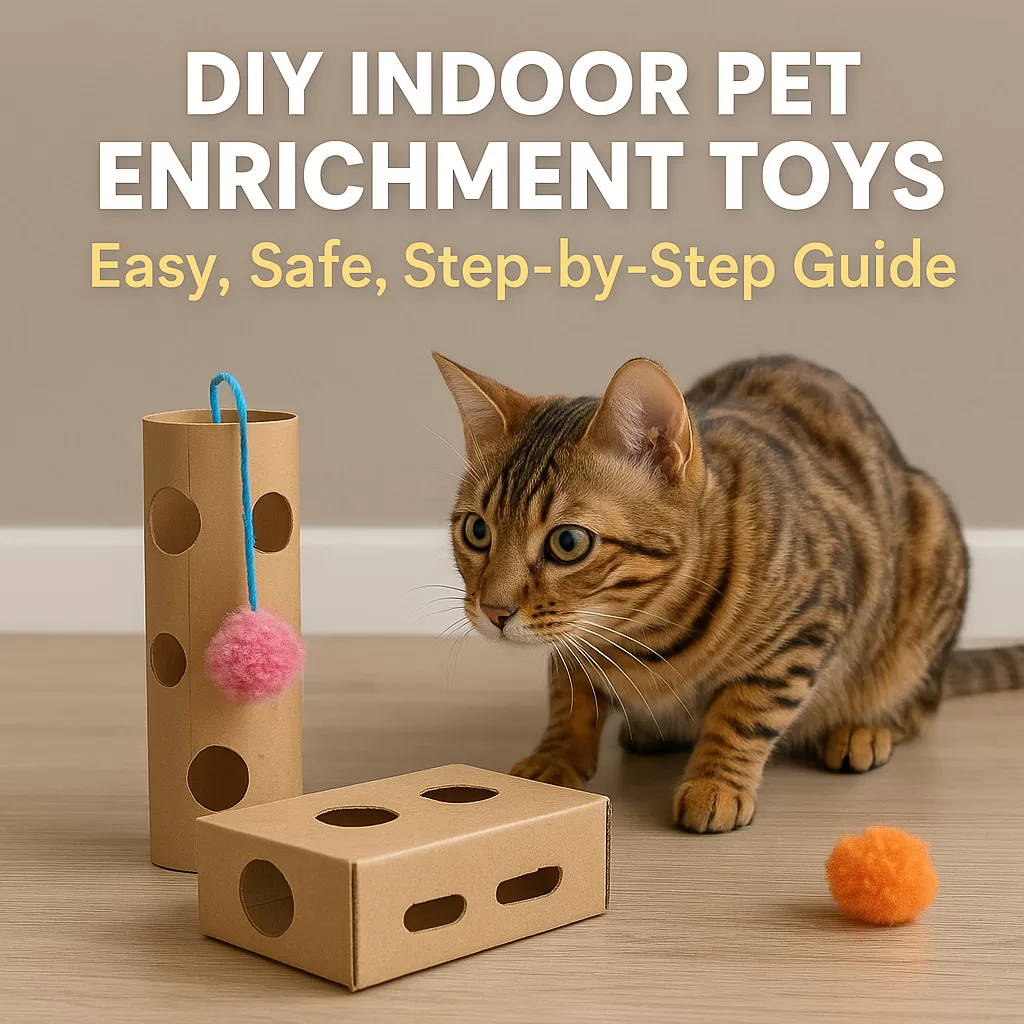

Keeping indoor pets mentally stimulated is essential for their well-being. Without proper enrichment, pets like cats, rabbits, birds, and hamsters can become bored, leading to destructive behavior and stress. The good news is that you can create engaging and easy DIY enrichment toys using simple household items such as cardboard boxes, paper rolls, bottles, and fabric. This guide will help you craft safe, fun, and stimulating toys that keep your furry and feathered friends active and happy.
Why Mental Stimulation Matters for Indoor Pets
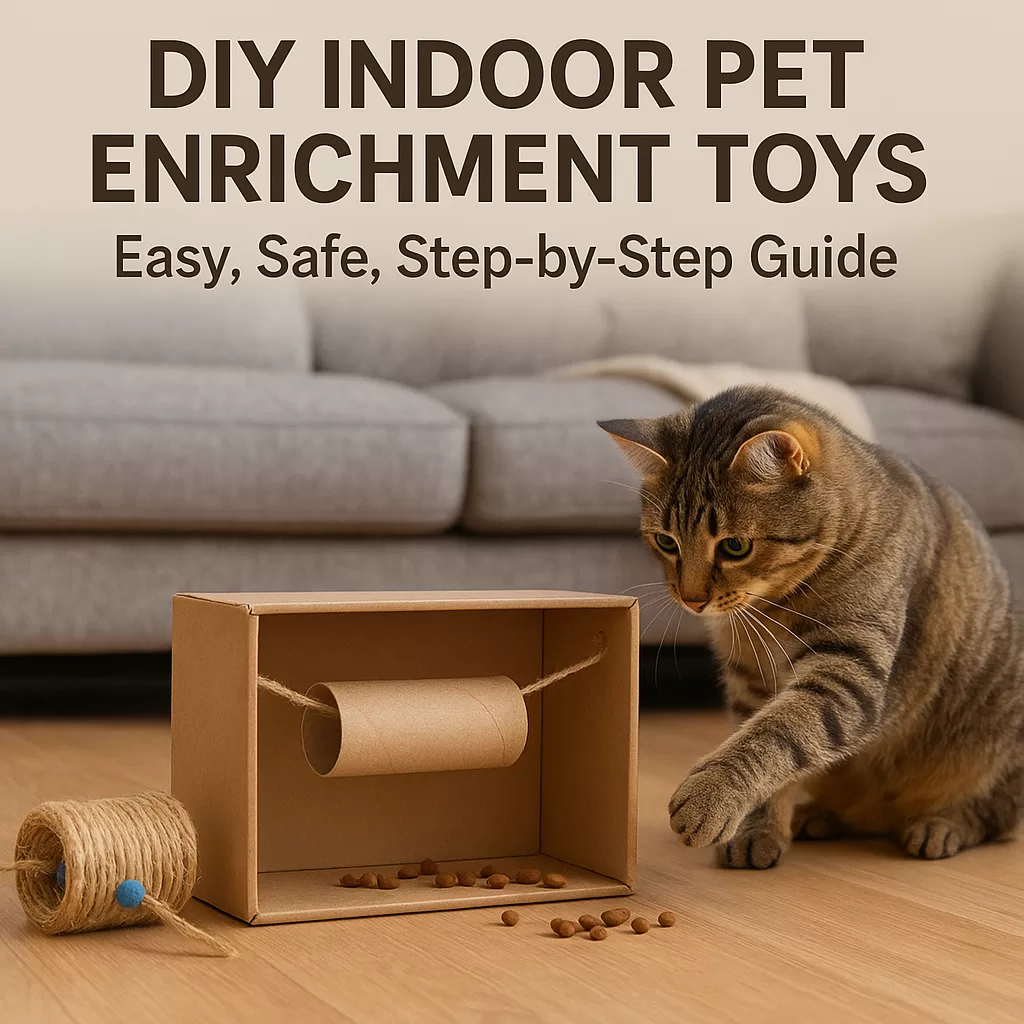
Indoor pets don’t have the same opportunities to explore and interact with the environment as outdoor animals. Mental stimulation:
- Prevents boredom and anxiety.
- Reduces destructive behaviors like chewing and scratching.
- Encourages natural instincts such as hunting, foraging, and problem-solving.
- Improves overall health and happiness.
DIY enrichment toys provide a cost-effective way to foster curiosity and exercise your pet’s mind.
Essential Safety Precautions
Before diving into toy creation, keep safety in mind:
- Use non-toxic materials. Avoid staples, small parts pets might swallow, or anything sharp.
- Monitor pets during initial playtime with new toys.
- Avoid loose strings or fabric that could cause choking or entanglement.
- Clean and replace toys regularly to prevent mold or bacteria buildup.
- Ensure toys are appropriately sized for your pet to avoid accidental swallowing or injury.
Simple DIY Enrichment Toys Using Household Items
Cardboard Box Maze (For Cats and Rabbits)
Materials:
- Several cardboard boxes (various sizes)
- Scissors or box cutter
- Non-toxic tape or glue
Steps:
- Cut openings in the sides of the boxes to create doors and tunnels.
- Connect the boxes with tape or glue to form a maze structure.
- Place treats or favorite toys inside to encourage exploration.
- Set the maze on the floor for your pet to investigate, hide, and play.
Paper Roll Puzzle Feeder (For Hamsters and Birds)
Materials:
- Empty toilet paper or paper towel roll
- Scissors
- Small treats or seeds
Steps:
- Fold one end of the roll to close it partially.
- Insert treats or seeds inside.
- Fold or crumple the other end to seal the roll.
- Cut small holes or slits to allow treats to fall out slowly as the pet rolls or nibbles the toy.
Plastic Bottle Foraging Toy (For Rabbits and Birds)
Materials:
- Clean, empty plastic bottle (small size)
- Scissors or craft knife
- Non-toxic paint or stickers (optional)
Steps:
- Cut small holes slightly larger than the treats you’ll place inside.
- Fill the bottle with pellets, seeds, or small vegetables.
- Secure the lid tightly.
- Allow your pet to roll and push the bottle to release treats gradually.
Fabric Scrunch Toy (For Cats and Hamsters)
Materials:
- Small piece of scrap fabric or old t-shirt
- Catnip (for cats) or dried herbs (optional)
- Cotton balls or soft filling
- Needle and thread or fabric glue
Steps:
- Place filling and optional herbs inside the fabric.
- Fold or roll the fabric into a small pouch.
- Sew or glue the edges securely.
- Present the toy for your pet to bat, chew, or cuddle.
How to Rotate Toys to Keep Pets Engaged
Using the same toy every day can quickly lead to disinterest. Rotate toys regularly to maintain novelty:
- Keep a variety of DIY toys and store some away.
- Introduce a new toy every few days or weekly.
- Observe your pet’s preferences and swap out less popular toys.
- Combine different toy types (puzzle feeders, tactile toys, hiding spots) for balanced stimulation.
Final Thoughts
Creating engaging and easy DIY enrichment toys for indoor pets is a rewarding way to enhance their lives using simple household items. With some creativity, attention to safety, and a plan for rotation, you can support your pet’s mental health and reduce destructive behavior. Start crafting today and watch your pet thrive in a stimulating and happy environment!