







A breathtaking archaeological discovery hidden for nearly two millennia has just come to light in Lake Neuchâtel, leaving experts stunned and rewriting part of Roman history.
Under the calm waters of the Swiss lake, divers uncovered the remains of an ancient cargo linked to the Roman Empire — including over 1,000 remarkably preserved artifacts, from ceramic vessels to weapons used by Roman soldiers.
The discovery was so significant that it was kept secret for months to prevent looting.
“We just froze in place”
The moment of discovery was unlike anything the team had experienced before.
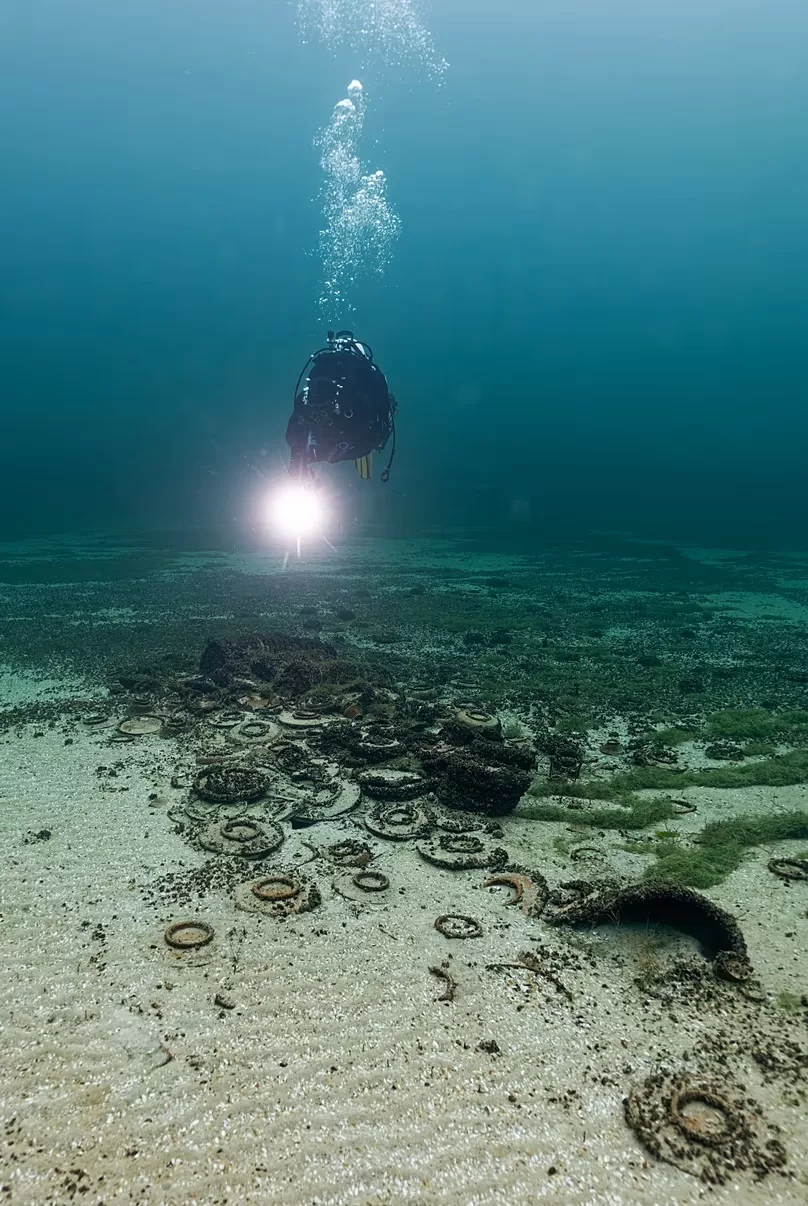
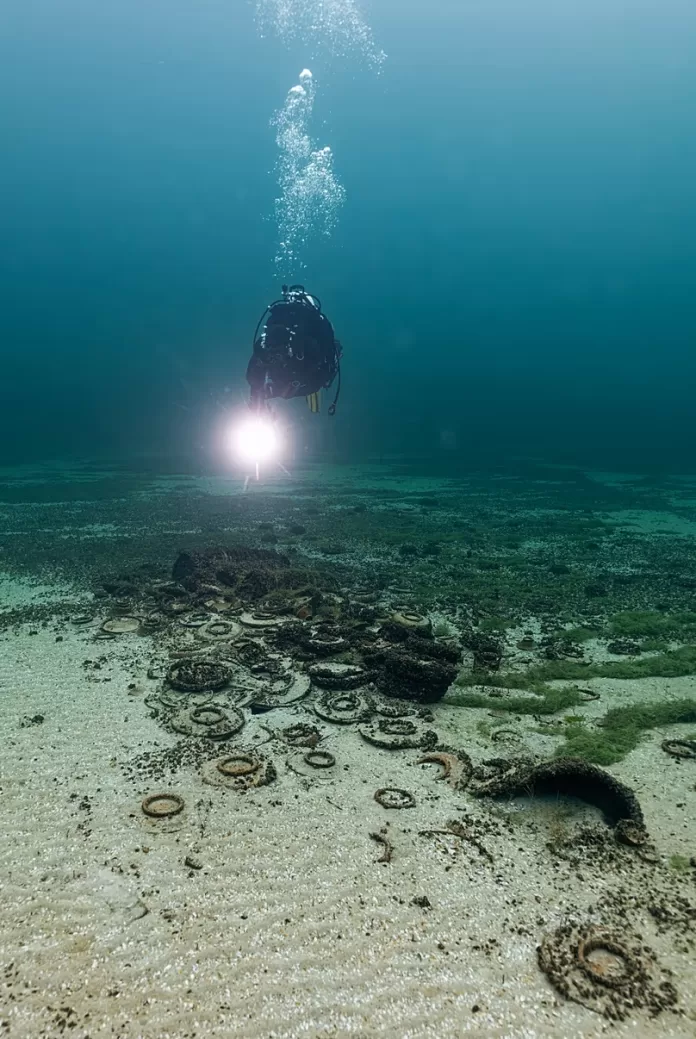
Fabien Langenegger and Julien Pfyffer, underwater archaeologists working with the Octopus Foundation, initially believed they had stumbled upon something dangerous.
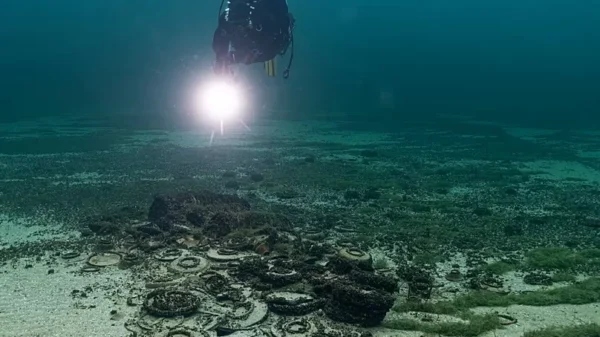
At first glance, the circular shapes on the lakebed looked like possible leftover explosives. But when they illuminated the area, a distinct terracotta color appeared.
“We stayed completely frozen above the cargo for several minutes,” Pfyffer recalled. “At that moment, I realized we were witnessing something extraordinary.”
A time capsule from 2,000 years ago
Experts believe the cargo belonged to a Roman ship that sank between 20 and 50 AD. The vessel itself has not yet been located, but the items recovered paint a vivid picture of life during that era.
Among the findings:
- Hundreds of ceramic plates, bowls, and containers
- Food remains still preserved inside some vessels
- A wicker basket that survived in exceptional condition
- Military equipment, including two swords, a dagger, and belt accessories
The presence of weapons suggests that Roman legionaries were escorting the shipment, possibly transporting supplies for a military camp.
Given the volume of artifacts, researchers believe the cargo may have been intended for a legion of up to 6,000 soldiers.
A discovery triggered from above
The breakthrough began with drone images showing a dark anomaly in the lake’s unusually clear waters. That clue led to diving operations and, ultimately, one of the most important underwater finds in the region in recent years.
Excavation campaigns carried out in 2025 and 2026 allowed the team to recover every visible artifact, preventing damage from anchors, fishing nets, or potential theft.
What happens next
All recovered objects are now undergoing cleaning and restoration on land. Specialists are analyzing fine details invisible underwater, including:
- manufacturing marks
- traces of food
- protective materials used during transport
These elements could reveal new insights into Roman trade, logistics, and daily life.
For now, one thing is certain: beneath the surface of a quiet Swiss lake, history waited patiently for over 2,000 years — and when it was finally uncovered, it left even seasoned archaeologists speechless.