






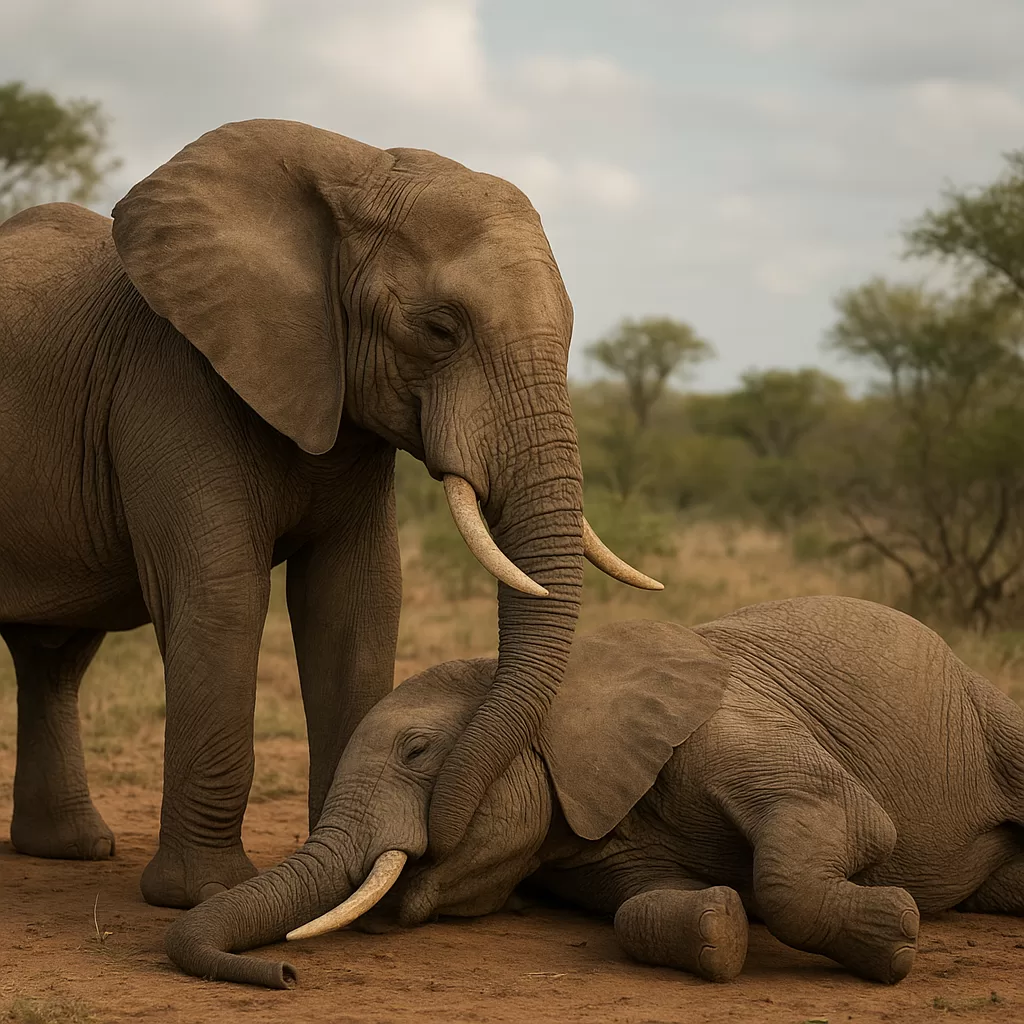

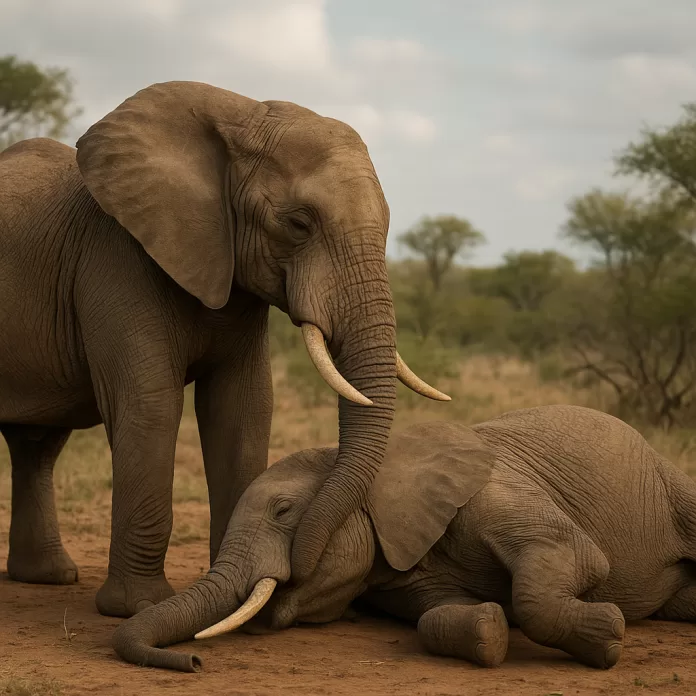
Elephants are some of the most remarkable creatures on Earth, not only because of their size but also due to their complex social behaviors and cognitive abilities. One of the most fascinating aspects of elephant behavior is how they mourn their dead, returning to places where they lost loved ones and demonstrating extraordinary memory and intelligence. Scientific research and documented cases provide compelling evidence of these behaviors, highlighting the deep emotional lives of these gentle giants.
Elephant Mourning Rituals: A Unique Form of Grief
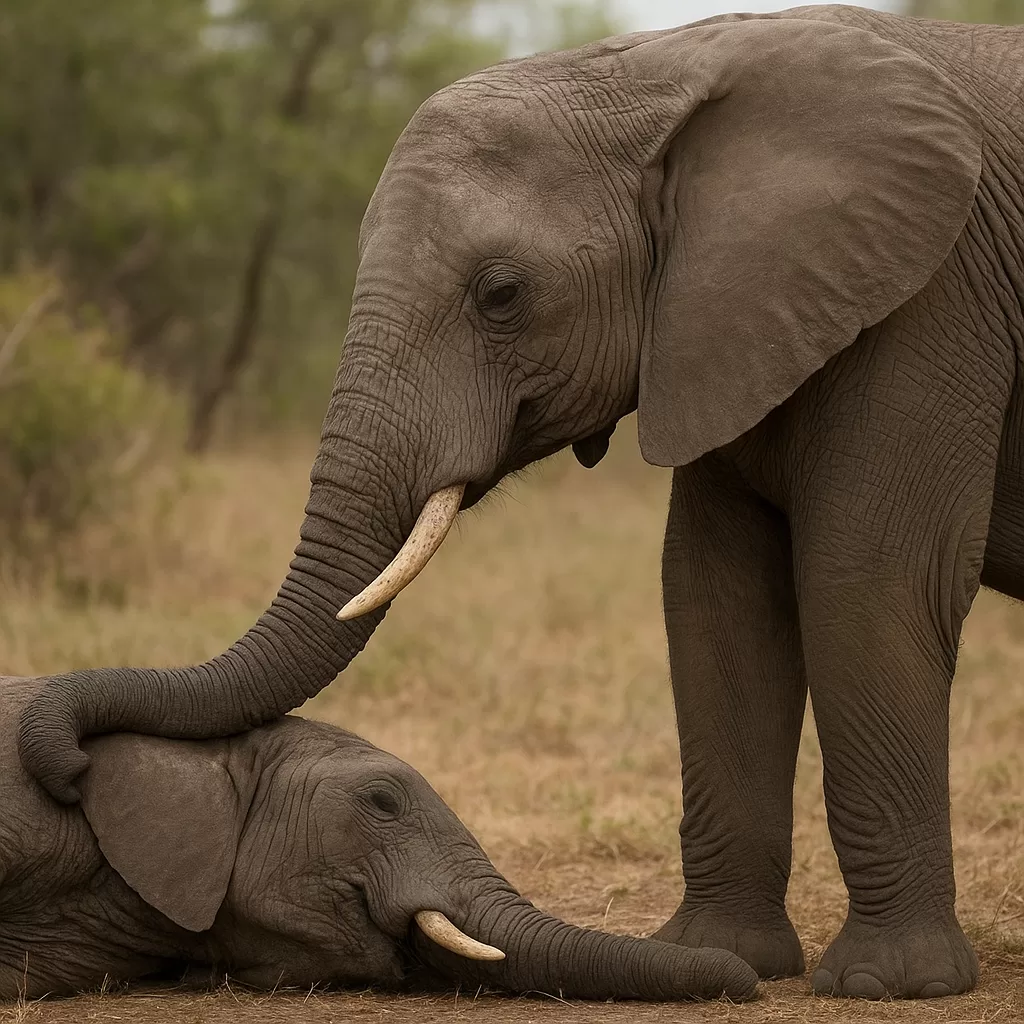
Elephants exhibit behaviors that strongly suggest they grieve their dead. Unlike many animals, elephants seem to understand death and respond to it in ways that go beyond simple biological reactions.
Signs of Mourning
- Touching and Caressing Bones: When elephants encounter the bones or body of a deceased elephant, they often gently touch or caress them with their trunks and feet.
- Standing Vigil: Elephants sometimes stand quietly by the body, paying close attention for extended periods.
- Covering the Body: There have been observations of elephants covering the body of a dead companion with dirt, leaves, or branches, possibly as a form of respect or protection.
- Quiet and Reserved Behavior: Groups may become subdued and silent following a death, indicating emotional distress.
These actions mirror what many humans interpret as mourning behaviors, reflecting a profound connection between elephants and their companions.
Returning to Places of Loss: The Elephant’s Remarkable Memory
One of the most astonishing behaviors linked to elephant mourning is their tendency to revisit sites where they have lost relatives or companions. This repetitive behavior points to one of elephants’ most famous traits: their extraordinary memory.
Documented Examples
In Amboseli National Park, Kenya, researchers have documented elephants returning to the bones of deceased family members years after their death. For instance, a matriarch returning to a site where her sister died, touching the bones, and appearing to recognize the location.
Why Return?
- Remembering Loved Ones: Revisiting these locations could help maintain social bonds even after death.
- Passing Knowledge: Older elephants may use these sites to teach younger herd members about their history and dangers in the environment.
- Emotional Closure: Similar to human grieving practices, returning may provide emotional closure or reinforce social bonds.
Elephants’ Extraordinary Intelligence: The Foundation of Their Behavior
The ability of elephants to mourn and remember the dead is strongly tied to their intelligence. Elephants have one of the largest brain-to-body ratios among land mammals, especially in the cerebral cortex, the area associated with thinking, planning, and emotion.
Cognitive Capabilities
- Self-Awareness: Experiments have shown that elephants can recognize themselves in mirrors—a capacity linked to higher intelligence and consciousness.
- Problem Solving: Elephants use tools and adapt strategies to obtain food or water.
- Communication: They communicate using a complex system of vocal calls, body language, and even seismic signals.
- Social Learning: Elephants teach and learn from each other, passing knowledge across generations.
The blending of these capabilities helps explain their complex social behaviors, including mourning.
Research Supporting Elephant Mourning and Memory
Scientists have studied elephants in both the wild and captivity to understand their responses to death and memory. Some key research findings include:
- Douglas-Hamilton’s Work: Elephant researcher Cynthia Moss first recorded elephants interacting with their dead in Amboseli National Park, laying the foundation for scientific acknowledgement of grieving behavior.
- John Poole and Cynthia Moss (2011): Their studies described elephants’ reactions to death and detailed how elders pass on knowledge within a herd.
- Journal Studies: A study published in Proceedings of the National Academy of Sciences analyzed the reactions of wild elephants to deceased family members and found consistent behaviors confirming mourning.
These scientific advances underline the conclusion that elephant mourning and memory are genuine, measurable phenomena.
Conclusion: The Emotional World of Elephants
The ways elephants mourn their dead, return to places where loved ones have passed, and demonstrate exceptional memory and intelligence reveal a rich emotional and cognitive world. They are not simply large animals acting on instinct but beings capable of empathy, grief, and social memory.
Understanding and respecting these behaviors is crucial for conservation efforts. Protecting elephants means acknowledging their emotional complexity and ensuring they live in environments where their social and cognitive needs can be met.
Elephants teach us that mourning, memory, and intelligence are not uniquely human traits but shared across species, inviting deeper compassion for our fellow creatures.