








Imagine walking into a classroom where the goal is not to pass a test or complete an assignment, but to understand one another better. No textbooks. No grades. No pressure to perform. Just an hour dedicated to conversation, reflection, and empathy.
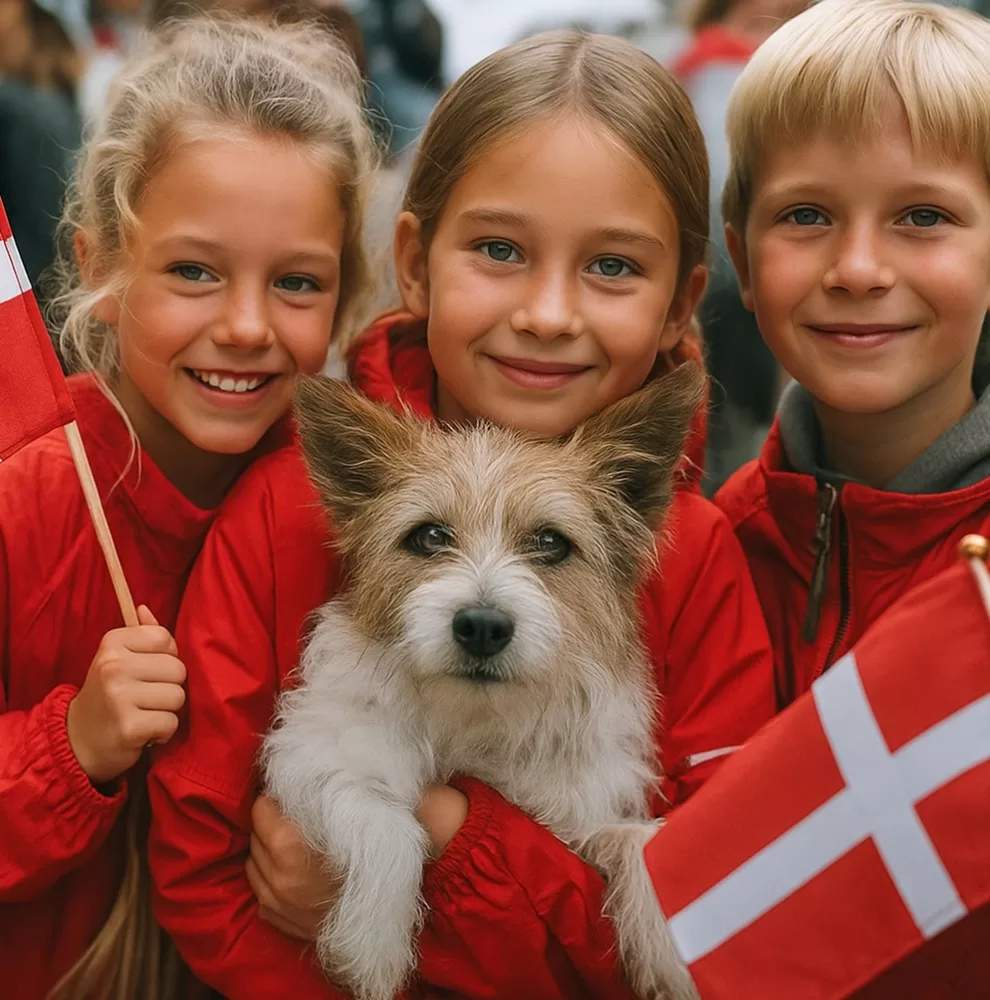
In Denmark, this idea is not imaginary. Children between the ages of six and sixteen participate in a weekly session known as “Klassens tid,” which translates to “class time.” It is a structured period built around dialogue and emotional awareness rather than academic achievement.
At its core, this practice asks a powerful question: What would happen if kindness were treated as an essential life skill rather than an optional virtue?
A Classroom Without Competition
During “Klassens tid,” students sit together and talk openly about what is on their minds. They discuss friendships, misunderstandings, worries, and daily experiences. Small conflicts are addressed early, before they have the chance to grow into larger issues.
There are no grades attached to these conversations. No one is evaluated on how well they speak. The environment is intentionally free of competition. Instead, the focus is on listening carefully and expressing feelings honestly.
Teachers act as guides rather than judges. They help students recognize emotions, take responsibility when necessary, and practice sincere apologies. They encourage children to include classmates who may feel left out. Most importantly, they teach students to listen not to respond, but to understand.
This shift in focus transforms the classroom atmosphere. The hour becomes a space where vulnerability is not weakness, but strength.
Learning Empathy Beyond Human Relationships
The commitment to kindness in Danish schools does not stop with interpersonal relationships. Children are also encouraged to develop empathy toward animals.
Students learn that pets and farm animals have needs, experiences, and forms of communication that deserve respect. Through projects and practical examples, they begin to understand why gentle treatment and attentive care matter. Compassion becomes something concrete, not abstract.
Rather than presenting kindness as a rule to follow, schools cultivate it as a habit to practice. Week after week, children are given opportunities to apply empathy in real situations. Over time, this repetition shapes behavior naturally.
Kindness becomes part of their routine, just like mathematics or language studies.
Building Confidence and Understanding
One of the most striking outcomes of “Klassens tid” is how it influences different personality types within the classroom.
Shy students often find their voice in this safe environment. Because there is no pressure to compete or outperform peers, they can speak at their own pace. Gradually, they gain confidence.
Meanwhile, more outspoken or self-assured students learn another essential skill: active listening. Instead of dominating conversations, they practice patience and attentiveness. They begin to understand perspectives different from their own.
The result is not uniformity, but balance. Students grow individually while strengthening their sense of community.
Trust develops. Patience increases. A shared sense of responsibility forms within the group.
A Different Vision of Education
Traditional education systems around the world often emphasize measurable achievement. Test scores, grades, and rankings dominate discussions about success. While academic excellence is important, Denmark’s approach suggests that emotional intelligence deserves equal attention.
Teaching kindness is not a sentimental experiment. It is a deliberate strategy for shaping capable, resilient individuals.
When children learn how to navigate disagreements calmly, they carry that skill into adulthood. When they practice empathy regularly, they are more likely to approach social challenges thoughtfully. When they experience inclusion firsthand, they are more inclined to create inclusive environments later in life.
In this sense, “Klassens tid” is not simply an hour of conversation. It is long-term investment in social stability and cooperation.
Why Kindness Education Matters
Modern societies face complex challenges that cannot be solved by technical knowledge alone. Collaboration, understanding, and emotional awareness are essential in workplaces, communities, and families.
By teaching kindness explicitly, Danish schools acknowledge that empathy is a skill that can be strengthened through practice. It is not something children either have or lack. It is something that grows with guidance and repetition.
The idea challenges the assumption that compassion develops automatically. Instead, it recognizes that young people benefit from structured opportunities to reflect on their behavior and its impact on others.
Perhaps most importantly, it demonstrates that education can shape character as intentionally as it shapes intellect.
Could the World Use More “Class Time”?
The Danish model invites reflection beyond national borders. What might change if more schools dedicated time each week to open dialogue and emotional growth? How might workplaces, communities, and relationships look if kindness were treated as foundational rather than secondary?
The simplicity of the concept is part of its strength. No elaborate equipment is required. No complex curriculum is necessary. Only time, attention, and commitment.
Teaching kindness is not a soft idea. It is a powerful one. It molds individuals who are capable of cooperation, patience, and respect.
Perhaps the world does not need more competition. Perhaps it needs more “Klassens tid.”