



When Compassion Walks Down the Church Aisle
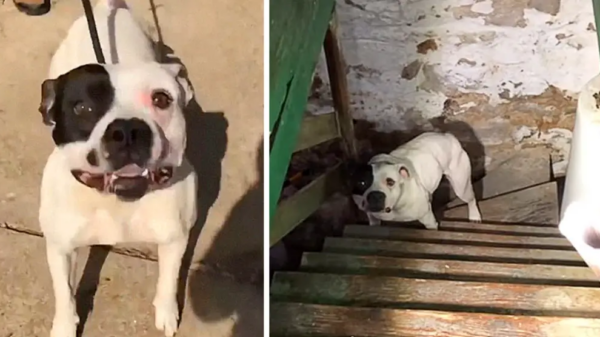
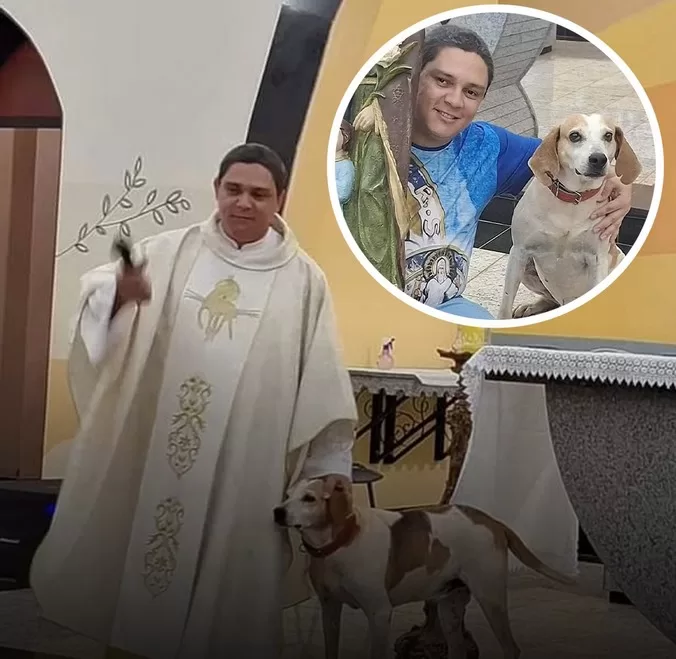
In the parish of Santana, located in Gravatá, Brazil, Sunday Mass looks different from what most people would expect. As parishioners take their seats and the familiar rhythm of the service begins, something unexpected unfolds. Stray dogs walk into the church calmly, sometimes guided by volunteers, sometimes on their own, and settle beside the faithful.
They are not rushed out. They are not treated as a disruption.
Instead, they are welcomed.
This initiative was started by Father João Paulo Araujo Gomes, a priest who saw a connection many overlook. For him, faith is not confined to words spoken at the altar, but expressed through actions that protect the vulnerable. In a city where stray dogs are a daily reality, he chose to address the issue not with distance, but with closeness.
His idea was simple but powerful. He wanted people to meet these animals in an environment defined by calm, care, and empathy. Away from traffic, hunger, fear, and overcrowded shelters, the dogs could finally be seen for who they are. Not as a problem to be solved, but as living beings in need of connection.
During Mass, the dogs often lie quietly next to churchgoers, sometimes resting their heads against a pew or a pair of folded hands. The atmosphere changes subtly. People notice them. They observe their calm behavior, their trust, their vulnerability. In that space, surrounded by messages of love and responsibility, many hearts soften.
For Father João, this setting matters. He believes that when people encounter animals in a place associated with reflection and compassion, they see them differently. The church becomes a bridge between suffering and safety.
His involvement goes far beyond opening the doors.
Father João personally takes care of many of the dogs. He temporarily houses them, ensures they are fed, and often pays for medical treatment from his own resources. Vaccinations, basic care, and recovery from illness are part of his daily routine. There is no institutional funding behind this effort. It is driven by personal commitment.
Some have questioned whether animals belong in a church. Father João’s response is consistent and calm. For him, mercy has no boundaries. If a space is meant to welcome, then it must welcome fully. He does not see the presence of dogs as conflicting with faith, but as a direct expression of it.
This approach has had tangible results.
Many of the dogs who attend Mass are adopted directly by members of the congregation. People who came for worship leave with a new responsibility and a new bond. Others cannot adopt but help in different ways. They share photos, talk to friends and neighbors, and spread awareness. Each act increases the chances that these dogs will find a permanent home.
What makes this initiative remarkable is its quiet nature. There are no banners or campaigns. No pressure to adopt. Just exposure, patience, and trust in human kindness. The dogs are not presented as objects of pity, but as companions waiting to be chosen.
Over time, the community has embraced this model. Parishioners have come to expect the presence of dogs as part of the service. Children learn early that care extends beyond people. Older members speak of how the animals bring a sense of peace into the space.
The impact extends beyond individual adoptions. It changes how people think about responsibility. Stray animals are no longer invisible. They are seen, known, and remembered.
Father João’s work highlights a broader truth. Social problems often persist because they are kept at a distance. When brought into shared spaces, when faced directly, they become personal. And when something becomes personal, people act.
This church in Gravatá has not solved the issue of stray animals in Brazil. But it has created a model rooted in dignity rather than urgency. In presence rather than pity.
The dogs who walk down that aisle carry no signs or labels. Yet their quiet participation speaks louder than any sermon. They remind everyone present that compassion is not abstract. It sits beside us. It waits patiently. And sometimes, it simply needs a door to be opened.
Through this simple act, countless dogs have found safety, and countless people have rediscovered what care looks like when it is lived, not just preached.