





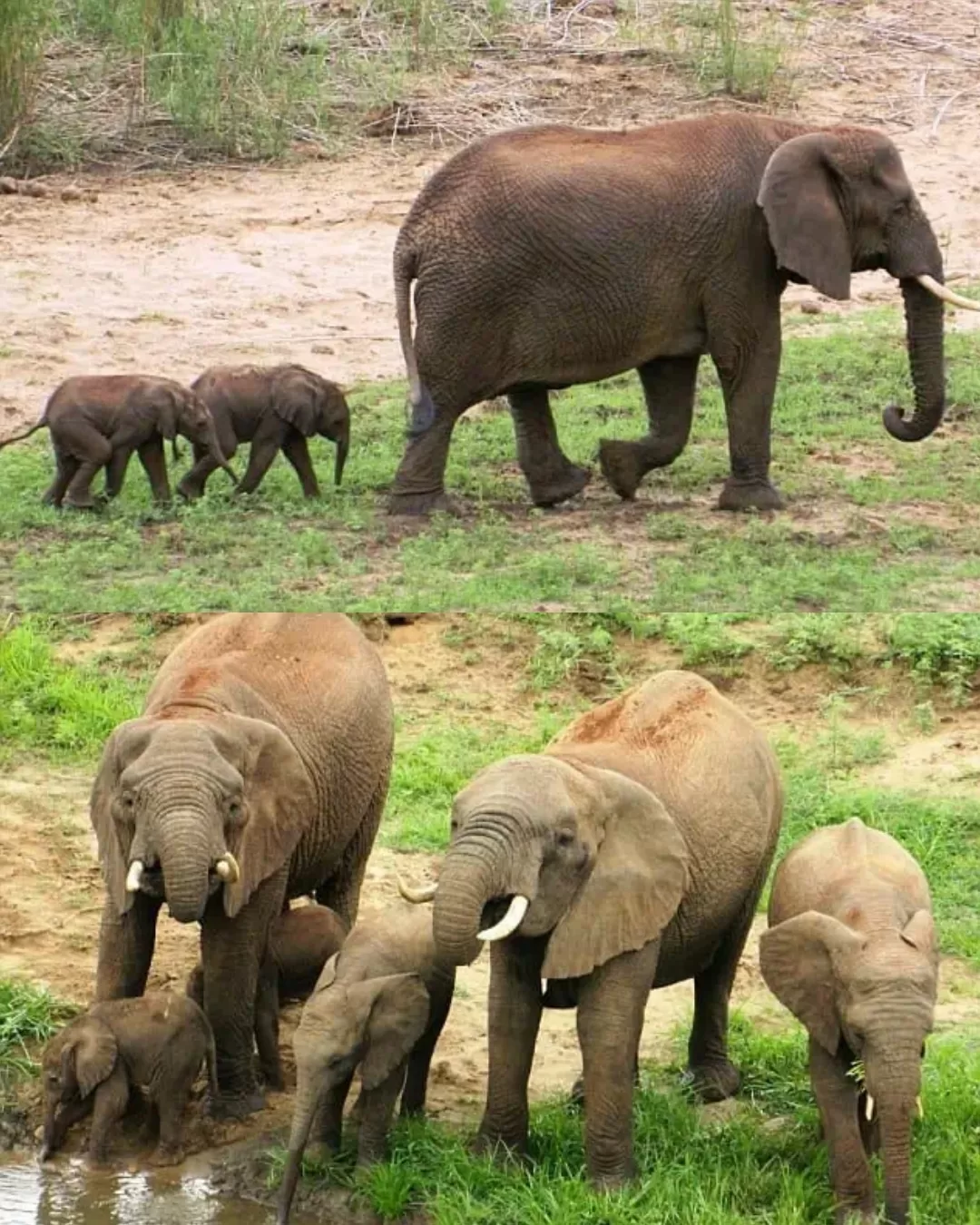

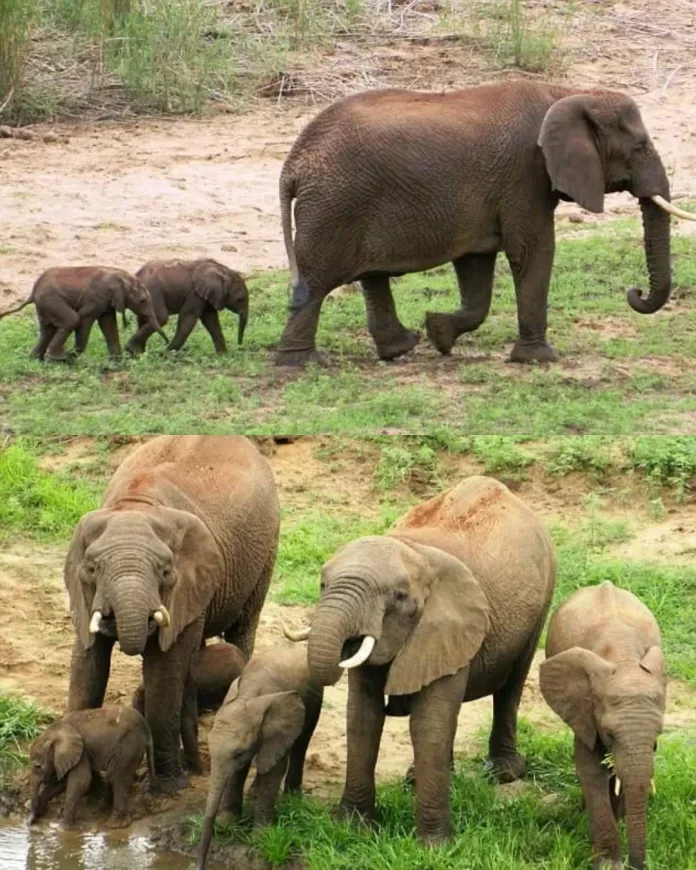
In nature, extraordinary moments rarely arrive with noise or spectacle. They unfold quietly, shaped by patience, instinct, and time. Such a moment occurred at Pongola Game Reserve, where an event so rare that many conservationists never witness it in a lifetime took place.
Elephant twins were born.
For the first time in more than a decade, the reserve recorded the arrival of two calves from a single birth, a phenomenon that immediately captured the attention of wildlife experts and conservationists around the world.
A Birth That Defies the Odds
Elephants are widely admired for their intelligence, memory, and emotional complexity. Twin births, however, are among the rarest events in their species. Fewer than one percent of elephant pregnancies result in twins, and even when they do, survival is far from guaranteed.
Raising one calf already places enormous physical demands on a mother. Producing enough milk and energy for two often proves too much, and historically, one twin is frequently lost within the first weeks of life.
At Pongola, the herd’s behavior signaled that something significant was unfolding even before observers fully understood what was happening. The elephants slowed, clustered tightly, and surrounded one female in labor. Her name was Curve.
Curve and the Strength of the Herd
At 31 years old, Curve was an experienced and respected member of the herd. When labor began, she was not alone. Female elephants give birth supported by family members, including sisters, aunts, and older cows who remain close throughout the process.
The first calf arrived without alarm. Birth was familiar territory for the herd. What followed moments later was not.
A second calf emerged.
Two newborns, arriving just moments apart, entered the world together. The herd responded immediately, not with confusion or fear, but with coordination. Adult elephants formed a protective circle around Curve and her calves, creating a physical barrier against threats and disturbances.
The message was clear. These lives mattered, and they would be defended.
A Rare Sight at Pongola
For reserve staff observing from a distance, the importance of the moment was undeniable. The last confirmed case of elephant twins in the region dated back to 2006, nearly twenty years earlier.
Many wildlife professionals spend entire careers without seeing such an event. Now, two fragile calves stood beneath their mother, their movements unsteady but determined, surrounded by a family prepared to protect them.
Instinct, Experience, and Care
Curve adapted instantly to the challenge. She guided the calves with her trunk, encouraging them to stand, nurse, and remain close. Other cows stayed nearby, offering presence rather than interference.
The bull believed to be the father, Ingani, had died more than a year earlier. In elephant society, however, absence does not equal abandonment. The herd filled the gap, reinforcing the communal structure that defines elephant life.
Survival among elephants is collective, not individual.
The Days That Followed
In the days after the birth, the twins remained close to Curve, often partially hidden beneath her massive body. Experts monitored the situation carefully, fully aware of the biological challenges ahead.
Elephant specialist Dr. Ian Whyte explained that the odds are rarely in favor of both twins surviving. Milk supply is limited, and energy demands are immense. Still, something about this situation suggested resilience.
The reserve chose not to intervene. Staff maintained distance, allowing Curve and the herd to function naturally. The goal was simple: provide calm, privacy, and trust in the elephants’ instincts.
Protection in Motion
As Curve led the twins to water, other cows positioned themselves strategically, forming a corridor of safety. When the calves struggled, trunks reached out gently to guide them. When they tired, the herd slowed its pace.
This behavior is not symbolic or sentimental. It is how elephant societies function. The entire group adjusts to protect its most vulnerable members.
This is how calves survive droughts.
This is how injured elephants are escorted.
This is how grief is shared.
And now, it is how two newborn calves were given a chance at life.
Observation Without Interference
The sex of the twins was not immediately determined. There was no urgency. The priority was survival, not documentation.
Reserve staff resisted the instinct to intervene, recognizing that sometimes the most responsible action is restraint. Curve remained calm and attentive, her trunk tracing the calves’ bodies as she memorized them through touch, scent, and vibration.
Elephants do not forget their young.
Why This Moment Matters
In a world where wildlife stories often end in loss, this birth offered something quieter but equally powerful.
Hope.
Not guaranteed. Not dramatic. But real.
Elephant twins symbolize resilience in an ecosystem that demands constant adaptation. Their survival is uncertain, but so is everything worth protecting.
A Quiet Celebration
There were no crowds or announcements. Celebration came in subtle signs.
Two calves nursing successfully.
A herd moving more slowly than usual.
Care chosen over urgency.
For those who witnessed it, directly or from afar, the moment served as a reminder of what conservation truly means. Not control. Not spectacle. But patience, humility, and protection.
Lessons Elephants Continue to Teach
The twins are unaware of how rare their birth is. They know only warmth, nourishment, and the constant presence of their family.
Elephants continue to show us truths we often struggle to live by. That family is essential. That strength is shared. That the most vulnerable deserve the greatest protection.
Curve did not question the difficulty of the task. The herd did not calculate the cost.
They stayed.
And in a world that often moves too fast to care, that choice may be the rarest miracle of all.
Two elephant twins were born at Pongola Game Reserve.
But what truly arrived that day was a reminder that survival is strongest when it is shared.